Case Studies / Trafman Solutions
S/4HANA & SAP BTP · SAP ActivateDesigning a connected SAP enterprise for Trafman — SAP Activate, Build Work Zone & BTP
Leading SAP Activate discovery and solution design to turn fragmented, manual workflows into one role-based digital workplace — connecting customers, suppliers, subcontractors and employees through SAP Build Work Zone and SAP BTP.
Business Challenge
One business, many disconnected journeys. Trafman’s teams relied on manual workflows, multiple platforms and disconnected data. Job requests, quotes, scheduling, dockets and invoices moved across channels with limited real-time visibility.
The brief was to define a solution that could scale with the business: a single, role-based entry point to SAP services, standard Fiori applications and targeted BTP extensions — for internal teams and external customers, suppliers and subcontractors.
Transformation Context
The engagement ran from SAP Activate discovery through to MVP handover. I combined SAP Activate with user-centred design so that every stage produced an artefact the next team could use — removing ambiguity between discovery, solution design and delivery.
Enterprise Landscape
- SAP S/4HANA Public Cloud as the standard business core
- SAP BTP for side-by-side extensions
- SAP Build Work Zone as the single role-based digital workplace
- SAP Fiori and Fiori Elements applications
- Four audiences: customers, suppliers, subcontractors and employees
Business Process / Operating Model
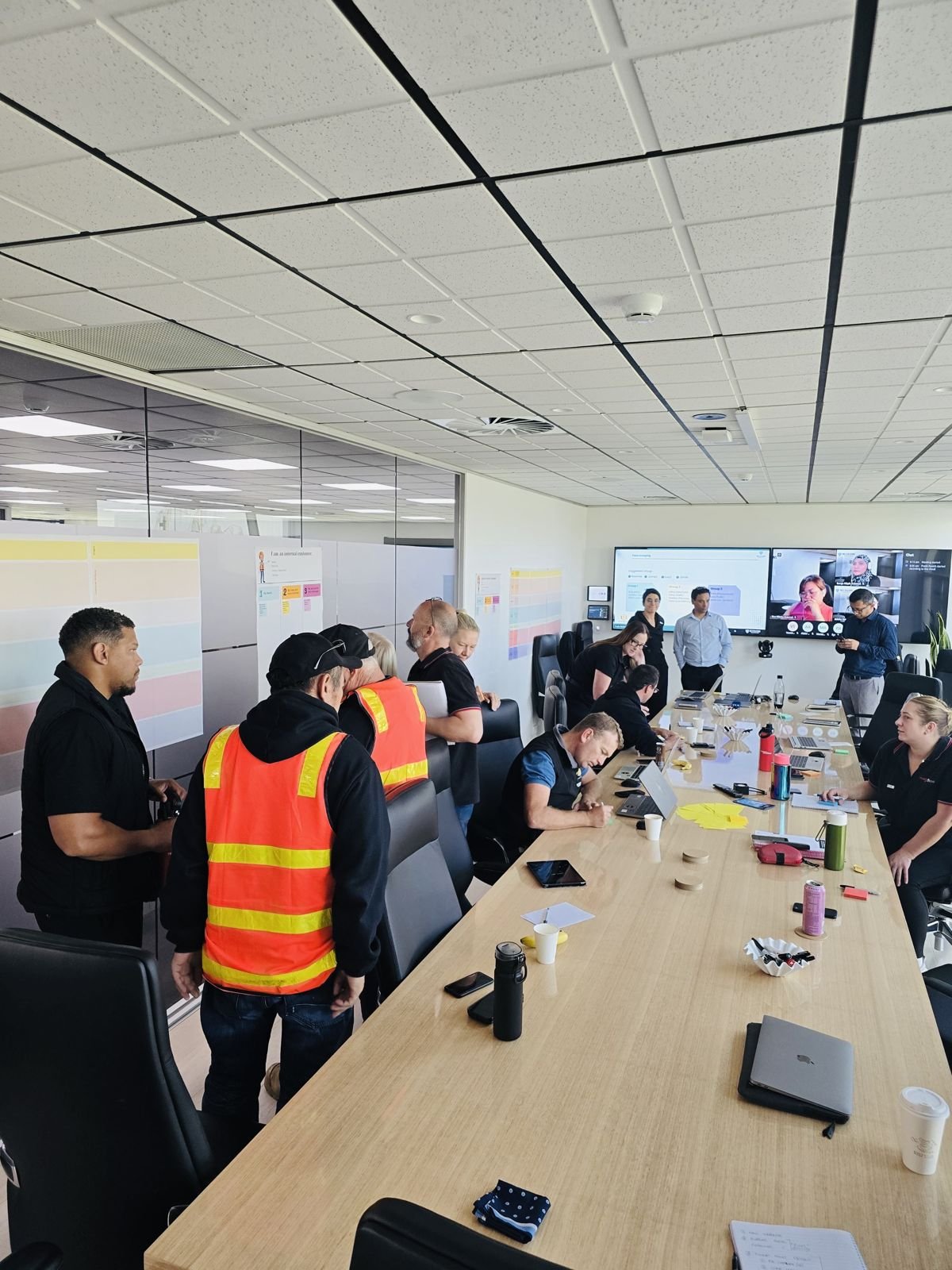
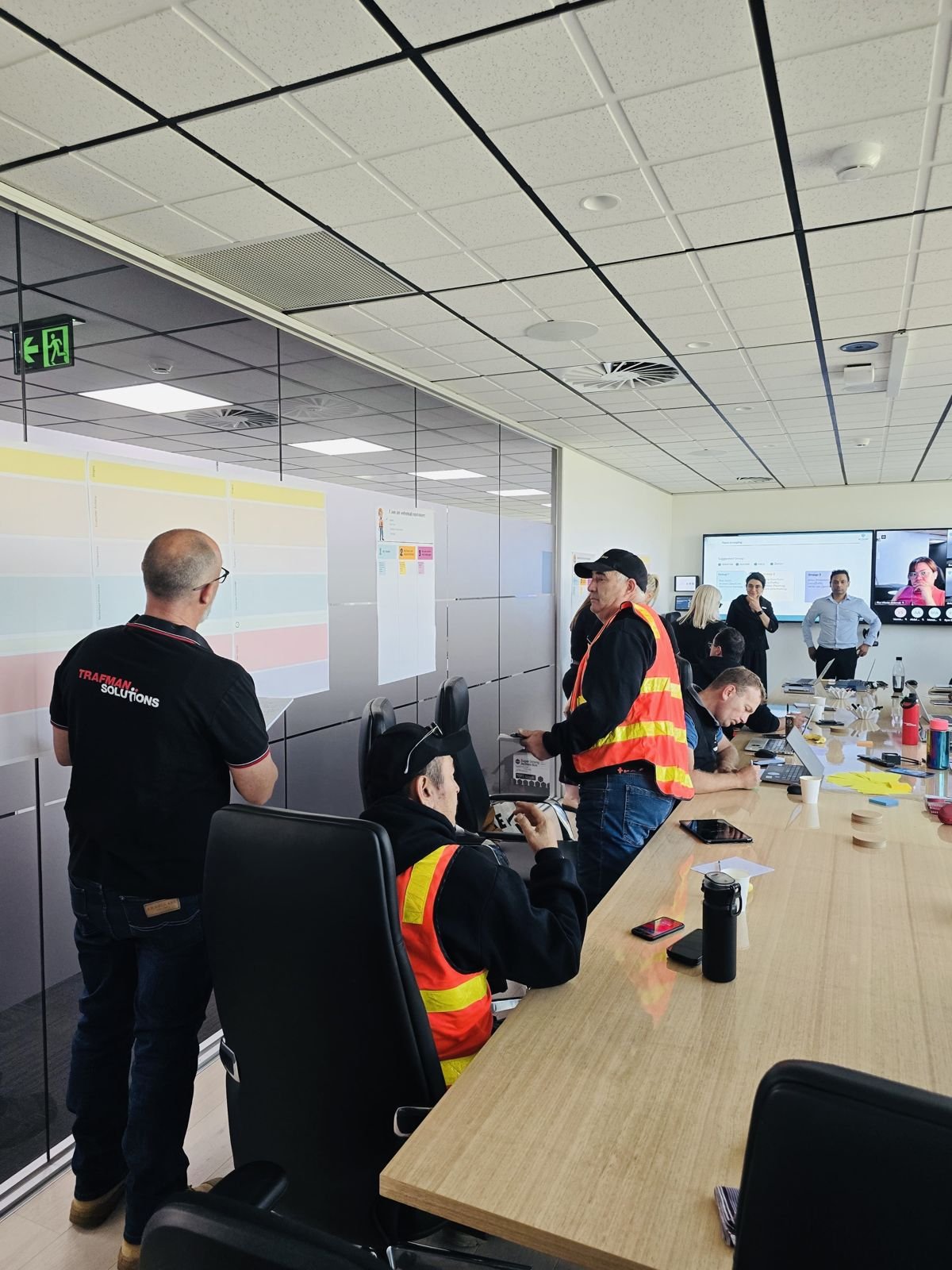
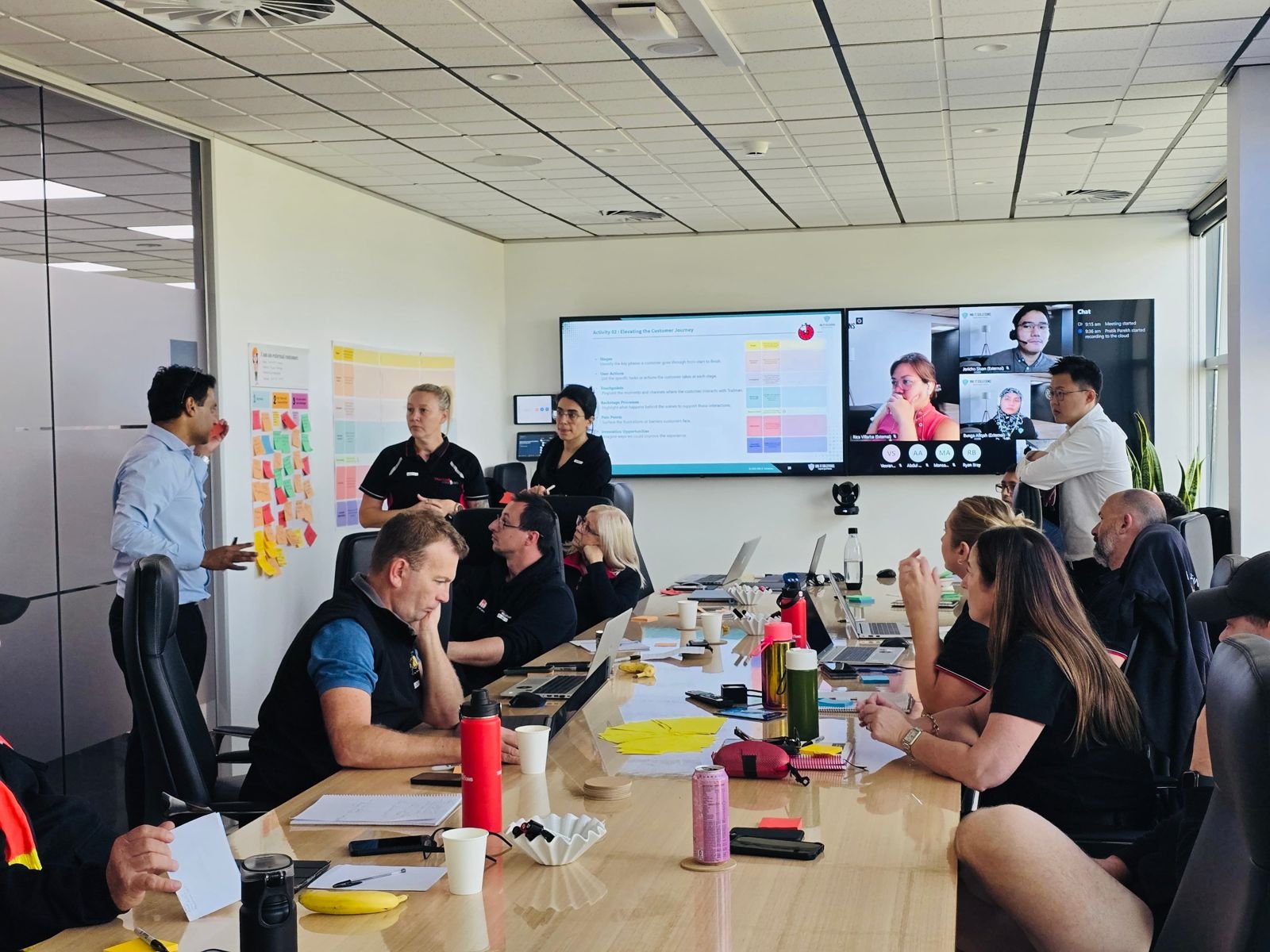
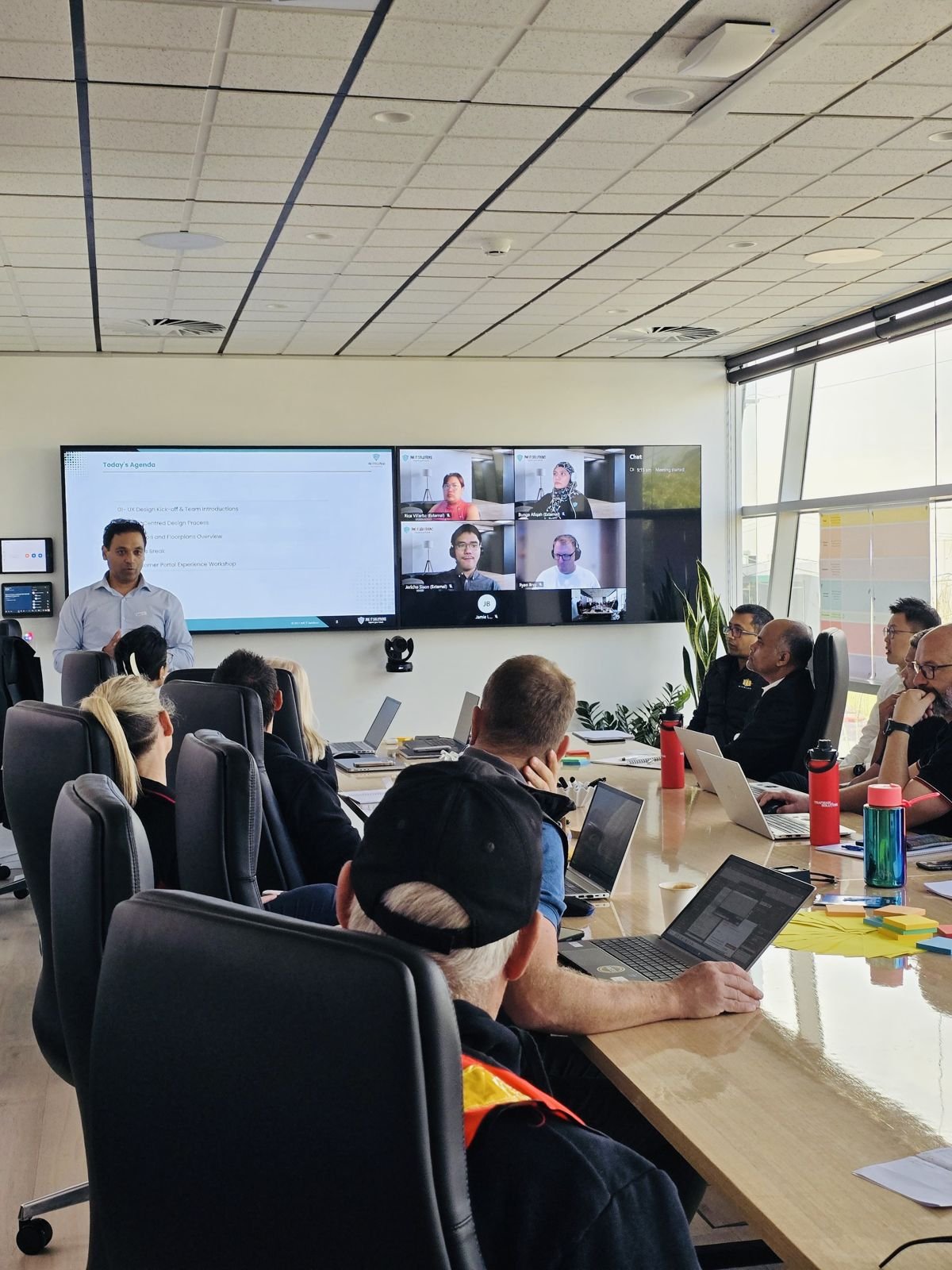
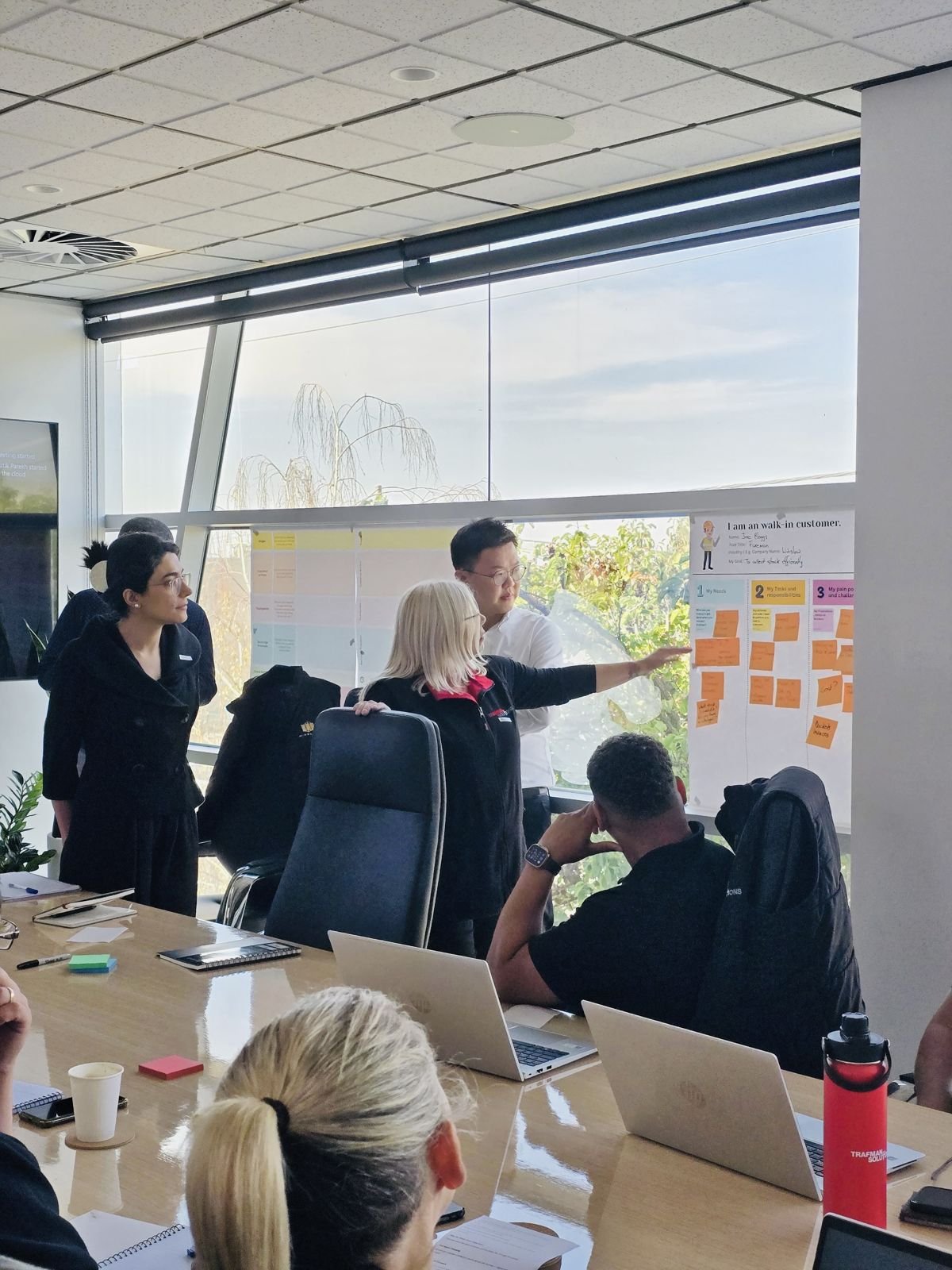
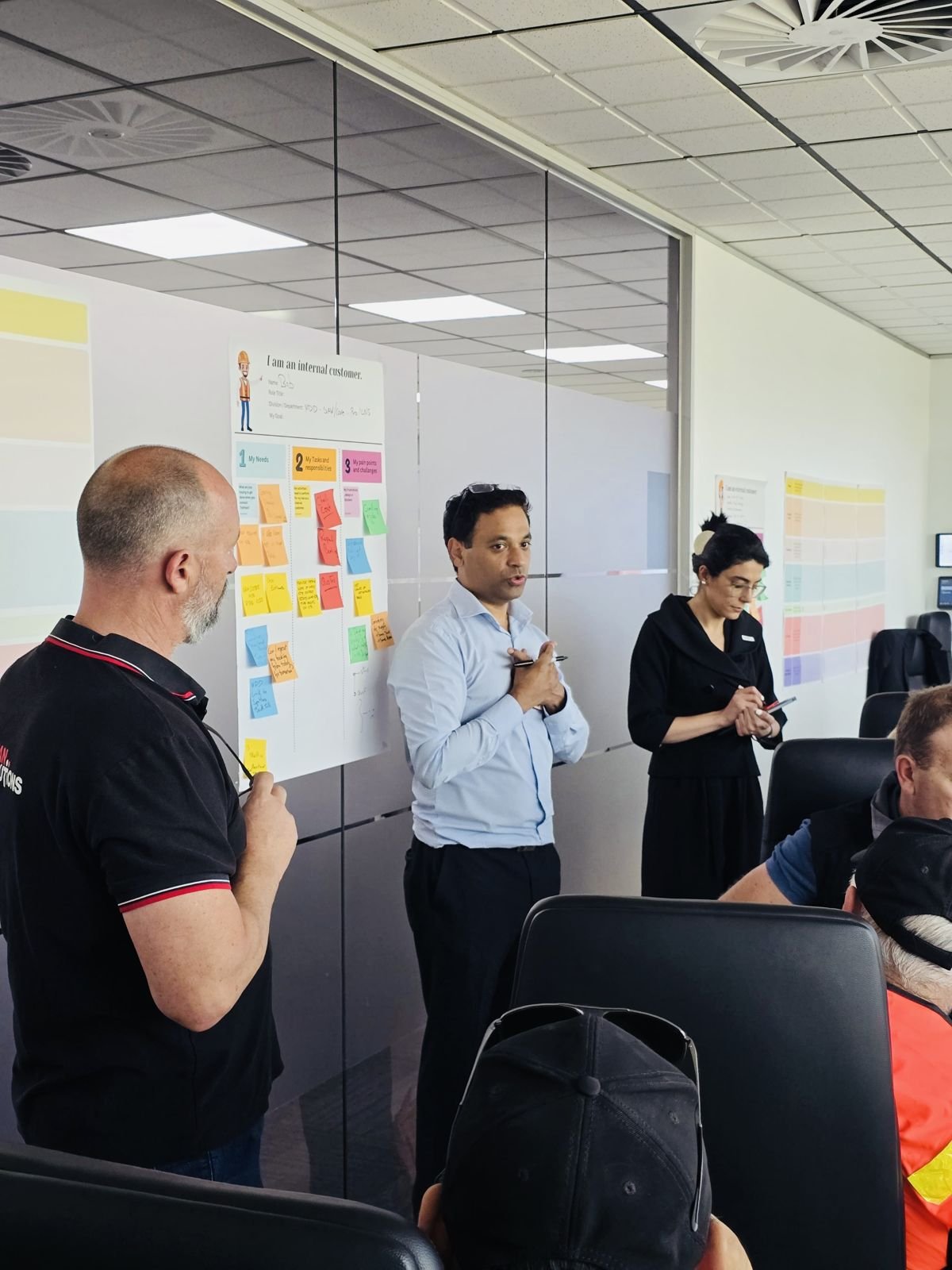
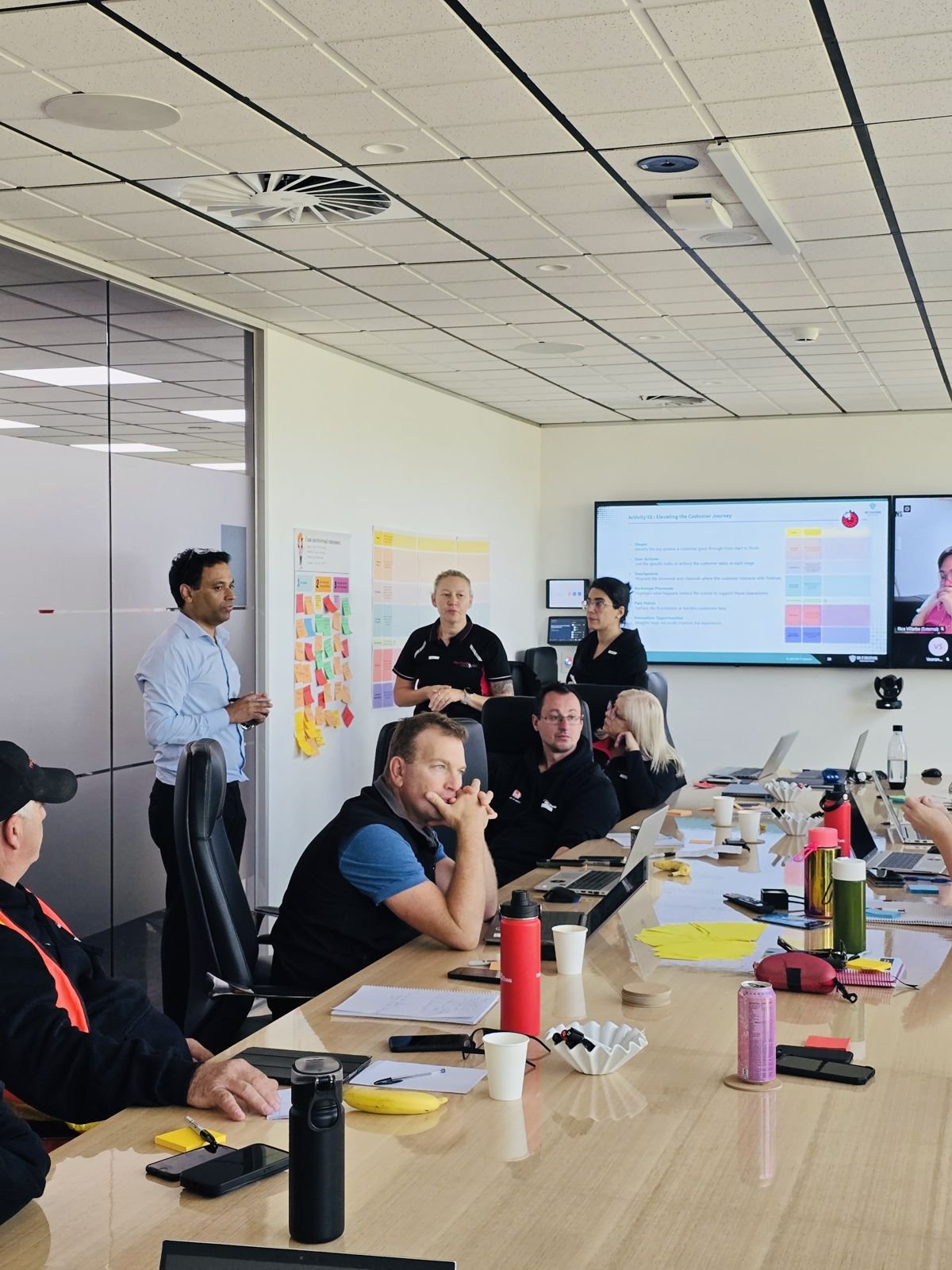
I planned and facilitated structured on-site workshops with business leaders, operational teams and SAP solution architects to document business goals, current processes, pain points, dependencies and the desired future state.
- Mapped job requests, quoting, scheduling, dockets and invoicing end to end
- Captured business, user, data and integration requirements
- Interviewed employees, customers, suppliers and subcontractors, and reviewed real job forms, invoices and dockets
- Built personas, task models and journey maps that exposed duplicated effort, manual approvals, visibility gaps and inconsistent communication
Personas were defined by responsibilities, goals, access needs and frequency of use — then mapped to SAP business roles, tasks, apps and permissions.
Architecture & Solution Decisions
Solution decisions followed one rule: use standard SAP where it fits, extend only where it creates value. Requirements were separated early into standard SAP needs and BTP extension opportunities, then assigned to the lightest pattern that met the need.
SAP S/4HANA / BTP Role
S/4HANA Public Cloud carries the standard processes. SAP BTP hosts targeted extensions, and SAP Build Work Zone brings standard Fiori apps and extensions together in one role-based workplace.
- Defined Work Zone spaces, pages, sections and role assignments
- Organised Fiori apps and BTP extensions into coherent work areas
- Designed responsive page layouts for internal and external users
AI Opportunity
AI was not in scope for this phase. The role-based workplace, persona-to-role mapping and structured job, docket and invoice processes give Trafman a clean foundation for future AI-assisted capabilities — such as guided job-request intake or status updates for customers — once the core processes are live.
Experience Strategy
Research with employees and external users shaped the Work Zone experience — the portal structure, navigation, content model and role-based entry points were co-designed with real users.
I then built an interactive, end-to-end MVP in four weeks using SAP UI5 design resources and Fiori patterns — from portal entry and navigation to task flows, page states and field-level interactions. Stakeholder playbacks and usability sessions with internal and external users validated the solution early, prioritised the backlog and resolved questions before build.
My Leadership & Responsibilities
- Planned and facilitated SAP Activate discovery workshops with business leaders, operations and solution architects
- Led user research with internal and external users
- Defined personas and mapped them to SAP business roles, apps and permissions
- Designed the Work Zone information architecture and role-based experience
- Built and validated the clickable MVP
- Led the handover to the delivery team
Key Decisions and Trade-offs
Business Outcome / Transformation Roadmap
A shared blueprint for business, design and delivery — and an implementation-ready handover that connected every design decision to an SAP pattern.
Handover package: Fiori Elements floorplans · UI5 controls and states · Work Zone spaces and pages · BTP extension patterns · responsive behaviour · user stories, role mappings and acceptance criteria.
“Transformation is not only about systems or screens. It is about understanding people, processes and systems — and aligning them to help people get work done.”
Discovery in the room.